

Asset-intensive organizations invest heavily in EAM systems, predictive maintenance, digital twins, and other technologies designed to improve reliability. But the value of those tools depends heavily on the quality of the asset information supporting them.
When asset records are incomplete, maintenance histories are fragmented, or critical OEM information sits outside the EAM, the impact reaches far beyond data quality. Maintenance planners spend more time reconciling records. Technicians spend longer searching for equipment information. Reliability engineers have less context behind the alerts they receive. Leadership struggles to compare performance across facilities.
Improving the asset data foundation changes how each of those teams works. The technology itself may remain the same, but the information available to the people using it becomes more complete, accessible, and trustworthy.
Better EAM Data Makes Maintenance Planning More Efficient
Maintenance planning becomes more difficult when asset information is spread across multiple systems. A planner may need to compare records between a legacy platform and a newer EAM, verify which asset record is current, or track down documentation before building a work package.
With a stronger EAM data foundation, that process becomes much simpler. Asset records are complete, maintenance history is connected to the correct equipment, and OEM documentation is accessible from the systems teams already use.
The result is less time spent reconciling information and more time available for actual maintenance planning.
NRX AssetHub implementation outcomes have shown maintenance planners saving approximately 1.5 to 2 hours per day when working with improved asset data. Across a team and over the course of a year, those hours can represent significant operational capacity.
Complete Asset Records Help Technicians Start Repairs Faster
The quality of asset information becomes even more important when equipment is already down.
A technician receiving a work order may need the correct OEM manual, nameplate specifications, previous maintenance history, or spare parts information before beginning the repair. When those records are incomplete or difficult to find, troubleshooting can quickly turn into information searching.
Complete maintenance and asset data gives technicians more of that information at the point of repair. OEM documentation can be connected to the correct equipment, nameplate information can be available within the asset record, and previous work orders can provide useful context about recurring problems.
NRX AssetHub implementation outcomes have shown technicians saving approximately 20 to 40 minutes per work order when asset information is complete and accessible.
The repair itself has not changed. The amount of time required to get the right information has.
Asset Data Quality Supports Predictive Maintenance
Predictive maintenance depends on historical information to identify patterns and provide useful alerts.
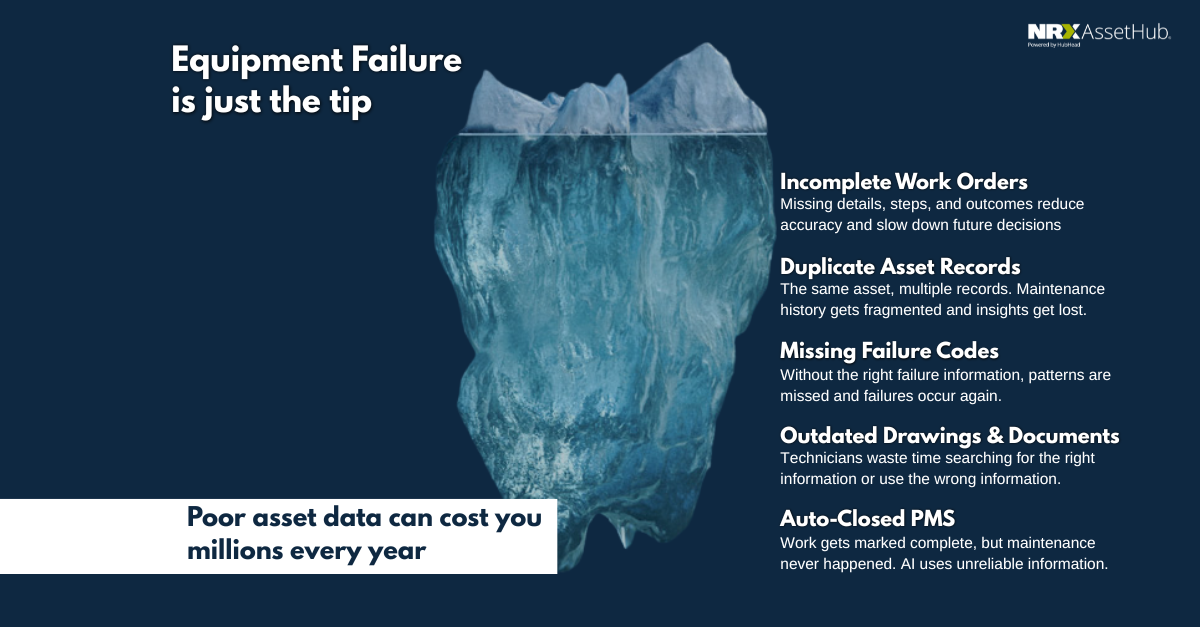
If an asset’s maintenance history is fragmented across duplicate records, previous failure codes are missing, or root causes were never documented, reliability engineers may have limited context when evaluating an alert. Over time, that can reduce confidence in the information being produced.
Improving asset data quality creates a more complete maintenance history. Failure information is connected to the correct asset, previous maintenance activity can be reviewed in context, and reliability teams have better information available when deciding whether an alert requires action.
This is an important distinction. Improving the underlying data does not replace predictive maintenance technology. It gives that technology a stronger foundation to work from.
Standardized Asset Data Improves Multi-Site Reporting
Asset data quality also becomes an enterprise issue when organizations operate across multiple facilities.
Different sites often develop their own asset hierarchies, naming conventions, maintenance practices, and reporting definitions. Leadership may then struggle to create a consolidated view of reliability performance without manually reconciling information from multiple systems.
Standardized asset data management helps create consistency across those environments. Shared asset hierarchy rules, naming conventions, and data definitions make it easier to compare performance across facilities and create enterprise-level reporting.
The value is not simply cleaner records. It is better access to information that can support decisions across the organization.
Building and Sustaining a Trusted Asset Data Foundation
Moving from fragmented asset information to trusted EAM and CMMS data does not necessarily require replacing the existing platform. It requires improving the information the platform depends on.
For many organizations, that starts with valuable data that already exists outside the EAM.
NRX Extractor helps turn information contained in OEM manuals, equipment nameplates, supplier documentation, and other legacy sources into structured asset data.
NRX Twin Builder helps organize OEM information into digital twins that connect equipment with components, specifications, and spare parts, making that information easier for maintenance teams to navigate.
NRX AssetHub analyzes, repairs, and sustains CMMS and EAM data quality so that asset records remain complete and consistent as the organization changes.
Together, these capabilities address different stages of the asset data lifecycle, from capturing existing information to maintaining its quality over time.
Better Asset Data Creates a Stronger Reliability Foundation
Improving asset data is not simply a data cleanup exercise. It can change how quickly planners build work packages, how easily technicians find information, how reliability teams evaluate equipment history, and how confidently leadership compares performance across facilities.
For organizations investing in EAM systems, predictive maintenance, digital twins, and industrial AI, the question is not only whether the technology is capable.
It is whether the data supporting that technology is ready.
What could change in your operation if your teams could trust the asset information they use every day?
NRX AssetHub helps asset-intensive organizations analyze, repair, and sustain CMMS and EAM data to build a stronger foundation for maintenance and reliability.
Related Posts

Share this article


