

Manufacturers continue to invest in new EAM systems, predictive maintenance, automation, and AI to improve reliability. Yet many organizations still struggle with recurring equipment failures, inefficient maintenance processes, and systems that do not deliver the visibility they expected.
The issue is not always the technology itself. Often, it is the quality of the asset data supporting it.
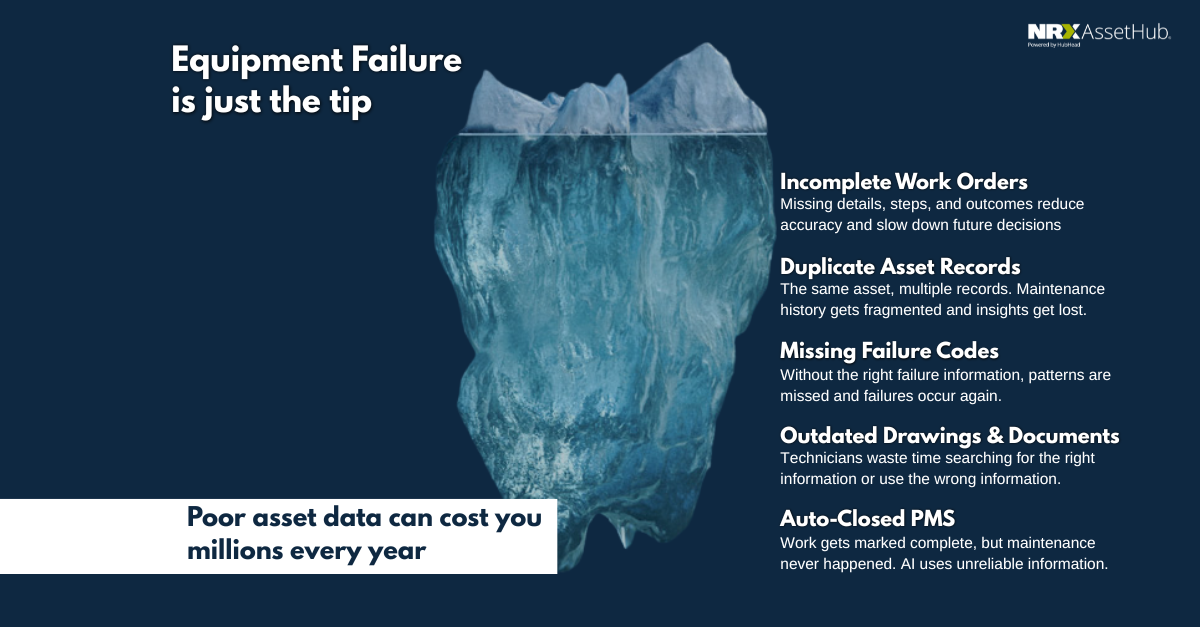
Duplicate asset records, incomplete maintenance histories, outdated equipment information, and unstructured OEM documentation can limit even the most advanced systems. Improving manufacturing reliability therefore requires more than implementing new technology. It requires a reliable data foundation.
Manufacturing EAM Performance Starts With Asset Data
Implementing a new enterprise asset management system can improve how manufacturers manage equipment, maintenance, and reliability. However, migrating to a new platform does not automatically improve the information being migrated.
If the existing system contains duplicate assets, inconsistent naming conventions, incomplete maintenance records, or outdated equipment specifications, those problems can simply move into the new EAM.
This can create challenges after go-live. Reports may require manual reconciliation, teams may continue relying on spreadsheets, and information can vary between facilities.
For manufacturers, EAM performance depends not only on the capabilities of the platform, but also on the quality and consistency of the asset data within it.
Predictive Maintenance Needs Complete Maintenance Data
Predictive maintenance relies on historical information to identify patterns and potential equipment problems. That makes maintenance history an important part of the process.
When work orders consistently capture failure codes, root causes, corrective actions, and maintenance activities, organizations can build a clearer picture of how an asset performs over time.
Incomplete records make that analysis more difficult. Auto-closed work orders, missing failure information, and duplicate asset records can leave gaps in an equipment’s history and reduce confidence in the insights generated from that information.
For manufacturers investing in predictive maintenance, improving maintenance data quality should therefore be part of the implementation strategy.
Spare Parts Data Can Affect Manufacturing Downtime
Asset data also plays an important role when equipment fails and replacement parts are needed.
Part numbers change. Equipment specifications may be missing from the EAM. Supplier information may be outdated. Nameplate data may exist only in photographs or OEM manuals.
When maintenance and procurement teams cannot quickly confirm the correct component, the repair can be delayed even after the problem itself has been identified.
Accurate spare parts data in manufacturing helps connect the physical equipment in the facility with the information teams use to maintain it. Keeping that information current can reduce unnecessary searching, incorrect orders, and delays during maintenance.
Work Order Data Helps Prevent Recurring Failures
A completed work order should provide more than confirmation that a repair occurred. It can also contribute to the long-term maintenance history of an asset.
Failure codes, root causes, and corrective actions allow reliability teams to identify recurring patterns and understand which equipment or components may require additional attention.
When those details are consistently missing, the organization may repair the same problem repeatedly without building the information needed to understand why it continues to happen.
Improving work order completion and manufacturing CMMS data quality creates more useful maintenance histories and gives reliability teams better information for future decisions.
Building Better Manufacturing Asset Data
Improving asset data does not necessarily require another major technology implementation. It starts with understanding where information currently lives and whether it can be trusted.
OEM manuals, equipment nameplates, supplier invoices, engineering documentation, maintenance histories, and existing EAM records can all contain valuable asset information. The challenge is making that information structured, standardized, and accessible.
NRX Extractor helps manufacturers extract information from existing documentation and map it to the appropriate assets within systems such as IBM Maximo, SAP, AVEVA, and Infor. This can reduce manual data entry and make legacy documentation more useful within modern asset management workflows.
At the same time, consistent asset hierarchies, naming conventions, work order standards, and data governance practices help maintain that information over time.
A Stronger Foundation for Manufacturing Reliability
Manufacturing organizations have more technology available to them than ever before. EAM platforms, predictive maintenance, digital twins, and AI can all support better maintenance and reliability decisions.
But those technologies depend on the information underneath them.
Before investing in the next system or reliability initiative, manufacturers should understand whether their existing asset data is complete, accurate, standardized, and accessible.
Better technology can improve how information is used. Better asset data ensures there is reliable information to use in the first place.
NRX AssetHub helps manufacturers analyze, repair, and sustain CMMS and EAM data to build a stronger foundation for reliability and asset management.
Related Posts

Share this article


